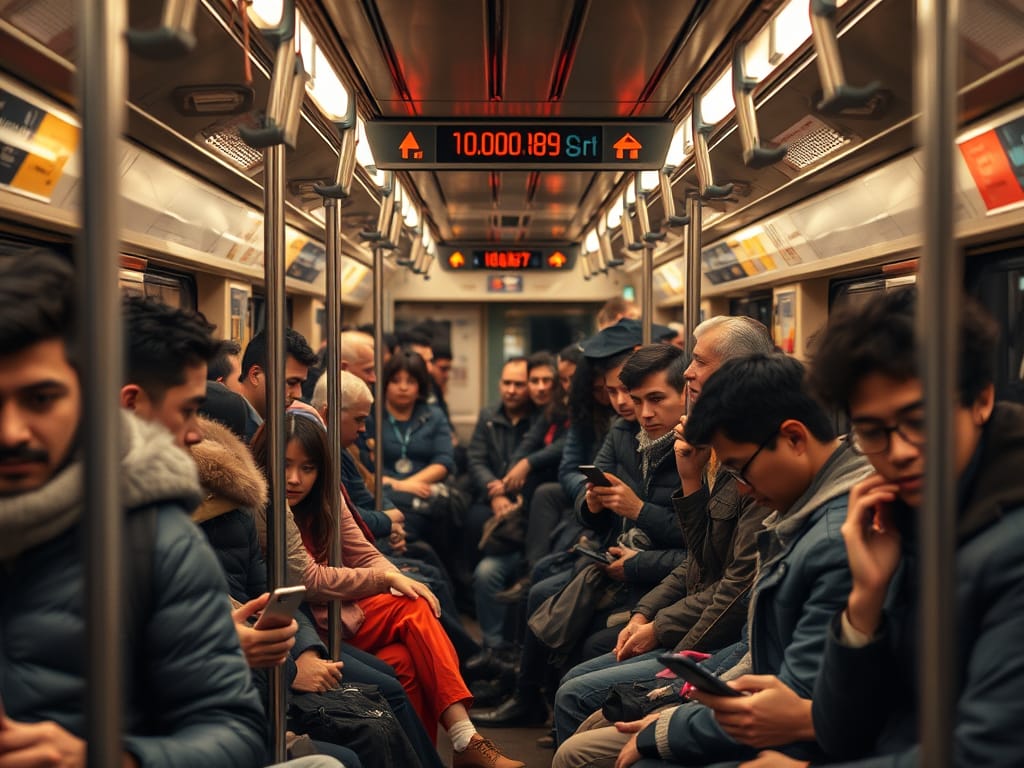
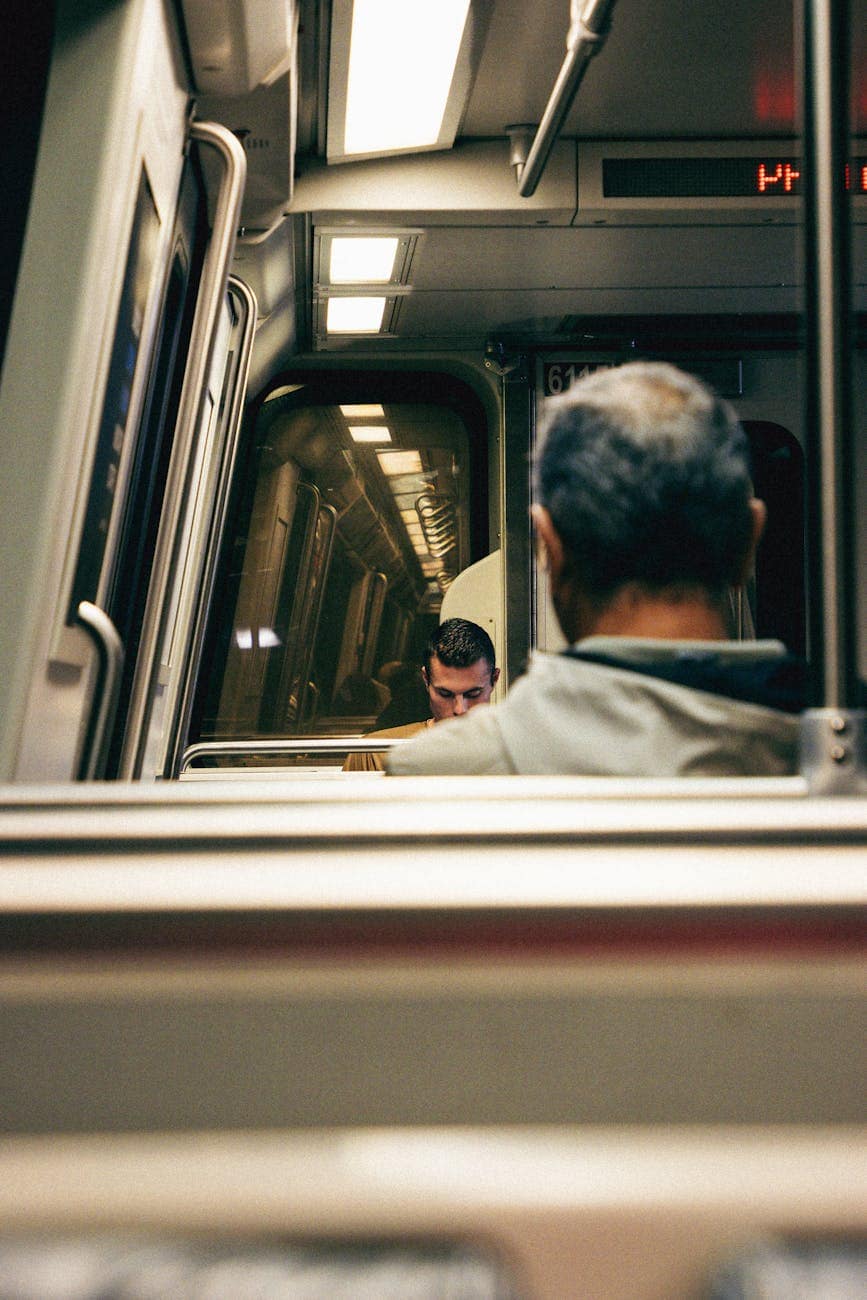
For me, dating apps are a uniquely big-city phenomenon. The idea that people can be represented as bundles of attributes spread across a virtual grid, and engagement follows some pre-established rhythm designed by those who want to ultimately solicit from you a yearly subscription (so that to find love is to never quite do it), can only achieve surface coherence in a dense, anonymised world where I encounter the tide of the other as some exotic possibility, a face that is still morphing into being, not quite what I am looking for yet.
This is not a screed against dating apps. Rather, until four years ago I was a heavy user of them. And throughout that time I had always been fascinated by the way looking takes on signification which at once complicates and simplifies an interaction, depending on how I end the retelling of each interaction.
Here is the kicker, we are all looking for something, else we will not be here. But what are we looking for exactly? The way we talk about this object that all dating app users supposedly circle around immediately belies the accidental character of the people involved. There is a perfected core within the experience we seek where the people are the sheer medium through which we seek it. At least, this is what mainstream critics of dating apps would like you to believe. By starting our search with the intention to look for something, we paradoxically guarantees our failure to actually locate the thing that drives us. This is a point which transcendentally structures Plato’s pursuit of love, and also forms the bulk of the utilitarian’s response to the naturalistic fallacy. It is not seek, and ye shall find, but stop seeking and ye might find, or not.
I disagree. I think it is intuitively true that we are all looking for something, but the de-centring of the person looking is neither the condition without which actual looking would not occur, nor the condition through which actual looking occurs. The very human and personal gaze which we direct through a crowd of people on dating apps is not just an accident we decouple from what is really going on. It is precisely the phenomenon which deserves a closer look, a more earnest description.

If Plato is correct, then none of us truly looks for anything
I want to start with a common feeling we probably all share in at some point in our lives. The Matrix (1999) dramatises this feeling most perfectly:
“Have you ever had a dream, Neo, that you were so sure was real? What if you were unable to wake from that dream? How would you know the difference between the dream world and the real world?”
Morpheus, The Matrix (1999)
The uncanny realisation that there should be more, despite what we are presently doing, or more singularly the perception of life as an illusion, forms the background against which the Platonist searches for love. It is perhaps unsurprising that late Academic Platonists were all considered skeptics because if we affirm the transcendence of the entire world, then all we are left with is the possibility of the better view. And this better view according to Platonists, begins at the point of questioning. We interrogate the fullness or the supposed haecceity of life as a way of becoming. We disavow what we are doing by giving it a more pessimistic, metaphysical signification towards which we also disavow all knowledge.
All this makes for a hysteric lover who has, in some sense, withdrawn from the world. First there is nothing, and then I find you amidst a sea of faces, we get together, form a family, and our joint venture begins to take shape over time, culminating in a form of immortality verified-by-the-acosmic-subject-though-only-known-partially-from-within. It is all very cinematic. It is probably the first stories we tell ourselves about what we will become in our quest for love, one frame at a time. There is ironic detachment to every frame because the frames’ valorisation is constantly caveated with them being-lesser. In everyday life we even witness a material hoarding of such “love frames” whenever we visit our relatives only to suffer them regaling us with tales of a higher love by dusting off old pictures of this and that person, as if they were merely conduits of the memories they never lived. Within this objective, recollection-based framing, dating apps are nothing but tools, instruments that serve some nobler good that will never be what the person is looking for. This is because whilst looking structures the world autochthonously, love as the higher good is transcendent. Who you are and what you are looking for, more crucially these being impossible to tell becomes the condition for a divine view of love, for Eros.
The Platonist excises the divine from the mundane, and in so doing, actually (unintentionally?) sprinkles a bit of divinity into every bit of the mundane. When it comes to dating apps, the most mundane uses of which invariably involve fast-food hook ups. It is a long-running joke that Freud turns everything into being about sex. But this is strictly speaking not true. In Freud we have the sublimation of sex as the Eros, or the sexistence of things: The vulgar statue, the vroom vroom of a race car, the platinum credit card – these are not about sexual drives in action, these are sexual drives in action. Platonism runs the other course by making sex about something more. It is the sublimation of the Eros (qua something totally transcendent) as sex. Suddenly an infinite gradation opens up wherein we can judge sex to be good or less good, depending on how close it gets to the divine. From this, one can easily mine arguments against dating apps – they severe intimacy, they objectify body traits, they marginalise non-ideal types. The argument is that even if all we have are base needs, on dating apps these needs are served in ways that participate to a lesser extent in the something that we all necessarily fail to find in the world.
I find the Platonic notion of participation entirely mysterious: Even if in lieu of carnal pleasures I ontologically commit myself to look for immortality, I can only do so by phenomenologically experiencing something else entirely. I am like the dissociated middle-aged uncle who surrounds himself with a wife and many children, yet secretly wishes he became a painter instead. The mundane things that Platonic love charges with divinity are wistful and dislocated from any sense of belonging, for these are disowned objects which have been pre-judged to be mere accidents of a more perfect next life. Even symmetric and perfectly framed sex between ideal bodies has, in one’s disavowal of the divine, lost all the carnality and the “stripping effect” it should have for everyday sexuality. One does not discover how much they enjoy or fail to enjoy a body part. It will be experienced in a bizarrely biblical way wherein one appears, one enters into another, and the next thing spontaneously appears. There is simply no role in the good for any individual. So naturally the Plantonist can view dating apps with nothing but disdain: Not only is it disingenuous for one to claim to be looking for something when there is nothing lookable to begin with, but more than that anything we can acquire instrumentally via dating apps, be it something more long-term, or something more immediate, is only going embody a lesser way of living. And this disillusionment scopes over more than just our love lives.
But let us be more precise about what the Platonist is claiming here. How specifically do dating apps stray from the good? Ontologically, the Platonist refuses to dwell amongst mundane things even whilst they profess the world to be of the very same make. They promise something more on the horizon without acknowledging their existence within a world beset by let-downs and the impossibility of fulfilment. But it is not just the “everyday” things that Platonists detest, it is all those who act out their desires, who perform some kind of worldly role. And for anyone who has any experience with dating apps, using one almost always begins with this. We log onto the app, we are immediately presented with a choice: Who am I? Performativity precedes teleology in the sense that our appearance unto the world has begun long before we get to wonder what it is exactly that our appearance is about. Instead of serving a higher divinity I seem to respond only to a self-image. This being the essence of our experiences with dating apps is one that Platonists cannot stomach.
But is performativity even avoidable? Do we ever stop performing outside of the digital space, as when we step into the real world, so to speak? I am inclined to say no. If the Platonist is prepared to view Eros as the unlimited towards which the world as becoming tends, then they must also accept Eros’ role in the world’s becoming, or more precisely, Eros’ connection to our various ways of performing sexuality. Performativity does not cease when I decide to go out and meet people the old-fashioned way. I am still the vain and image-obsessed individual who stands in front of a wardrobe imagining what I would look like in this or that outfit, fantasising about a future which appears so real that it practically charges my present and imbues it with all the sense that it needs. The problem with Platonism is not that instead of an image of two people sharing the same objective space we now have just an image of a disembodied person on a phone screen, it is with the splitting of Eros from appearances. Once we accept that appearances are accidental, reality is nothing more than a fancy word that we use to justify disliking things which already repulse us. Platonists believe that by being selective we can make use of certain images, or “love frames,” to piece together a meaningful whole, notwithstanding that the Platonic ontology already began from a position of defeat. That which we look for is from the onset totally unavailable. The idea that from this position of absolute epistemic fatalism one set of imagery can be singled out as being less performative, or some set of imagery can be judged to be sufficient for this life, does not corroborate what we find in our actual lives, which is less “this is unreal but enough,” but more “this is real but not enough.” Platonism confuses expectational with ontological insufficiency, believes the absolute transcendence of reality a reasonable inference from our general dissatisfaction with life, and more incredibly, this inference being a sufficient ameliorative for our general dissatisfaction. But this is how it errs from the very onset.
In Timaeus time is described as “the moving image of Eternity.” Eros as motion is then this primordial force which brings about life’s configuration in Eternity’s moving images. The aforementioned demotion of ourselves in time notwithstanding, it is at least arguable that the Platonic posturing which we find in its objection to dating apps is just an intermediary step on the ladder towards the enigmatic nous, and the story of Platonism may not actually end with “I’ll see you in the next life,” but with “Eros is…” Nevertheless, if there is some way that representational/Eternity’s time can give way to a genuine object that we do actually look for in this life, the object does not seem to be one which Platonism does not simultaneously renounce. And it is because Platonism throws out the object prematurely that I do not find the Platonic response to dating apps particularly interesting.
If the romantic is correct, then we cannot miss what we are looking for
But looking is not always condemned to fail, sometimes it is condemned to succeed.
In The Agony of Eros, Byung-Chul Han exposits what can only be described as a romantic notion of looking: We look upon a radical alterity, an Other, so magnificent, so possessive, that we become totally identical with this very act of looking. The object of looking is that to which our gaze is destined. It is equally transcendent as the Platonic Eros, except here there is a symbiotic unity between the two wherein to gaze upon the Other, to fail to do the act of looking justice, is posited as some kind of ethical act. The act is both asymmetric and valuable: To throw ourselves as such to the Other is to ontologically brace for a return that will never come. But at risk of life and dignity, the looker stands to gain everything. Here looking, loving, and dying converge into a disdain for the bare life, a self-consciousness which settles for the mere state of survival, of health. Loving is resolute, it is unrequited, and it is, put succinctly, everything.
There is some truth to such boundless romanticism: For one, such “loving” is attested to in our lived experience of time. Merleau-Ponty describes the “miracle of consciousness” as “to make phenomena appear through attention that establish the object’s unity in a new dimension at the very moment they destroy that unity.” Time as flow is always the anticipated next-moment passing over towards a recent past. As such, temporalised existence thickens in every blink of an eye: Every step I take in trepidation sediments in my existence as the background of my future-oriented expectations. The future feeds time without guaranteeing survivability. The rhythm in which each existence transitions into the next is something that is bodily present: We feel it in our heads, our hearts, our bones. More concretely, it is the sweat in our palms, the heaving upon our chests, the flushness of our cheeks. Our worlds become about these body parts when we rush to encounter a lover, a first date. In these self-possessing moments where life seemingly appears as time (not just in time), visibility qua visibility makes fool out of us all.
So what has romanticism gotten wrong about looking? Well, for one, the romantic dismisses dating apps as an attempt to homogenise the Other. When I log onto an app, I “opt into” an objective world where faces are composed of values. We accept that pictures are admissible evidence to determining whether someone is worth a conversation. We believe it justified to apply filters based on our own preferences. By making the Other knowable, graspable, quantifiable (all 5s are equal), we destroy the Eros, and we become melancholic, depressive, and incapable of true love.
It is uncontroversial, I believe, to claim that people are greater than the sum of their presupposed “parts.” Aristotle said as much in Metaphysics. What is unacceptable about the romantic position is how a genuinely refreshing description or thematisation of our basic condition as temporalised subjects then gives way to some method to judge something such as dating apps as “in line with” or “antithetical to” our subjectivity. We referenced utilitarianism earlier. The conundrum they face is a similar one: Assuming the moral worth of an action reduces to the utility inherent in its consequences, how do we apply this principle within the lived experience of decision-making? When I click a button to kill 5 people in order to save 100, am I enacting, instantiating, or becoming the principle I propositionally believe to be true? The naturalistic fallacy problematises any supposed coincidence between the being of a moral principle and the subjectivity of a consciousness. And so to this the utilitarian adopts the romantic position: Utilitarianism is true only to the extent that it eludes consciousness. Just like how the Eros becomes a genuine Other only to the extent that we become able to not able against it.
This move has a steep theoretical price, however. The intrusion of Eros as a foreign other cannot be legitimate until we find ourselves in a position where we can say absolutely everything and absolutely nothing about it. Both Eros and utilitarianism become this unfalsifiable, unattestable, undescrible being whose only graspable characteristic is its desirability. If my decision-making is itself undecidable, then utilitarianism no more demystifies morality than Protestant ethics clarifies capitalism. Here we have a mute, faceless, life-threatening being which totalises existence by demanding an ethical stance from us. This being does not pass through our experience, it is an atmosphere in which our every experience resonates. But then how does mere resonance vectorise to a particular experience as desirable or not? When I decide the fate of a fellow human being, be it in a dire dilemma where I get to play God, or in a romantic situation where I am about to take up someone’s courtship, my world has already transitioned imperceptibly from one existence to another. “The blood on our hands,” and “the being swept off our feet” are not the mere residue of some event which had just taken place. They are the motivated perceptions in the worlds where we resonate, bound up in the constructed notion of having-acted. The horror and the bliss that accompany a realisation of one’s agency scarcely gain the recognition they deserve before they give way in the flow of time to something else. Within this flow any alternative we can come up with becomes a part of a temporal adumbration, or a more enriched retention: The squirrel I remember seeing on my way to my first date got livelier, my daughter’s face I recall is suddenly one of agony – presumably shown by those whom I killed when I pulled the trigger on utilitarian grounds. There is no superior experience because the experience I actually have is all there is for me. And my actual experience is always beset with temporal projections and regrets. Romanticism fails to explain why using dating apps, via some mechanistic description of homogenising, ultimately results in an experience which is depressive or melancholic. If I have the capacity to homogenise the world, do I get to “suspend” this capacity under certain contexts? Why should I do so? What are the drawbacks for doing so? More importantly, if doing so is truly romantic, why have I not done so already? Against all these unanswered questions, all Han seems to be offering is a resounding condemnation of modernity as one which breeds “narcissism.” The underlying assumption is that narcissists do not love. But surely the more interesting question would be:
How do narcissists love, despite being unable to bow to an Other which guarantees love?
There is space between absolute knowability and absolute unknowability for a kind of looking. What does someone who unreflectively engages with given representations of bodies, personalities, and social symbols actually get out of doing so? In order for this question to be sensibly raised, the phenomenon itself must still pique the interest of those who think to raise the question. In other words, Han could use his own advice for he seems to have foreclosed his understanding of narcissists as much as he believes the latter have foreclosed their understanding of the Other. We must put consciousness back into what Merleau-Ponty calls “the act of learning,” a “circumscribed ignorance” where dating on dating apps is examined on its own terms.

Love as situated looking
We begin our discussion with a sketch of the big city: Vast, urbanised, integrated, buzzing with life. The promise of the city is precisely this enveloping vastness not unlike the concept of the night in Phenomenology of Perception. Merleau-Ponty describes the night as mana or undifferentiation:
“When…the world of clear and articulated objects is abolished, our perceptual being, now cut off from its world, sketches out a spatiality without things…The night is without profiles, it itself touches me and its unity is the mystical unity of the mana…The anxiety of neurotics at night comes from the fact that the night makes use of our contingency, that free and inexhaustible movement by which we attempt to anchor ourselves and to transcend ourselves in things, without there being any guarantee of always finding them.”
pp.441-442, Merleau-Ponty (2012)
The spatiality of an anonymous city is an enacted phenomenon, a background against which dating apps are used. One has to be technologically-savvy enough, be affluent enough, be comfortable enough, to log onto an app which aims to connect those with similar means. The capitalistic homogeneity might be detestable within another frame of mind, but here I view it as a background like any other. We exist in an overabundance of information and an undersupply of context: Faces we encounter look like one another, music we hear remind us of yet even more music. Networks are just a more polite way of describing a set of interchangeable and equally disposable individuals. Jenny Odell in How to Do Nothing – Resisting the Attention Economy names our very engagement with the big city life as “screaming into the void.” She draws from her personal experiences of using various social media platforms, especially from her attempts to have good faith political conversations only to discover that there was in fact no audience to receive any of her thoughts. Her response is not unlike Han’s – to retreat to a place where the centrifugal forces of alienation can once again appear centripetal. But to own alienation is as delusional as to master it. What alienation recalls, time and time again, is the urgent and unavoidable sense of contingency. We are certain in our anticipation that the city will beget something, and yet we are also unsure as to whether something will be begotten for us. Romanticism seeks to return us to a place where the two (the object of anticipation and the object of retention) will coincide in an ontological impossibility. But this is to fight the flow of time, and to be blind to the fact that we do anticipate, against the possibility of fulfilment; and what ends up arriving will only fuel more anticipation, provided that we continue to get carried along the temporal flow of existence.
Once this existential structure is properly grasped, it is not difficult to work out that there is nothing especially prejudicial at all in the big city towards the flow of time itself: Some of us who are lucky enough to be vexed by our own love lives lead lives that simultaneously lead to the development of, and the taking up of, the concept of a dating app. So what is a dating app? From the user’s point of view, it is a platform of intersubjective exchange like no other: When he uploaded a picture that I saw, it was not simply one self-enclosed consciousness intending some particular meaning which I accessed at the point of viewing the picture. Rather, his intention of uploading the picture, as a temporal possibility which could-have-not becomes my intention of viewing the picture as a temporal possibility which has-just-been. Should my viewing of the picture leads to an interaction, my viewing becomes even less like the one-sided exercise of voyeurism which is a common framing of these types of acts. It gets exported to his temporality as the same contingent possibility recently realised. A world where developers are inspired to create dating apps, and one where these apps attract enough users to generate a profit, is one where these intersubjective exchanges occur at a sufficient scale such that a spatiality is thereby enacted. To call this dynamic whereby interactions are initiated and carried forth by “internet symbols” such as “stats,” “emojis,” or “pics” narcissistic is but a form of libel. It does not illuminate what is actually going on. By the time we can describe an emergent world of anonymised individuals from such exchanges as “a big city,” and chastise them en masse as narcissistic, these exchanges have already occurred against the background of the big city. Part of living in a big city is to have access to this pool of romantic potential. It is a vulgar privilege that reveals itself as such the moment it is thematised. But that economics- and class-based guilt enters the picture does not reduce the fidelity of the big city. It merely adds depth to the whole experience.
We said before that whether the story is a complex or a simple one depends on when we stop telling it. We can wrap the whole thing up here, at the point of motivation, and then give a simple account of looking for love on dating apps as the “realisation” of romantic potentials. But what does this mean? If the big city is undifferentiation then the perception of any single individual on a dating app must appear simultaneously privileged and contingent. As a hyper contrast. We stare into the blank darkness only to imagine the unimaginable. What will end up contouring the shape of this imagination will not be the unimaginable, but it will have an aura of incredulity: Of all the things (ala. Kant’s omnitudo realitatis) that could have been, this is the thing that jumps out, that arrests our attention, that is motivated into being. It is precisely because no objects have yet to come into relief that we are relieved to find one amongst the engulfing darkness. And yet we often do not believe our eyes when things do emerge from the darkness. We squint, we panic, we theorise – What could motivate this emergence? Am I the only one who is seeing this? The vastness of the world contrasts with the smallness of the interaction as a chance encounter. And what could be more romantic than this? So it is strictly speaking not true phenomenologically that we interact with people on dating apps as just what these apps use to represent people. We experience a kind of shock horror whenever we receive the attention of, or we ourselves attend to, a full person. This shock can send butterflies flying in our stomachs, or it could be repressed. We could always dismiss this as a mere nothing. And we proceed to interact with people as if they are not fully people, in which case Han would be correct in saying that we would not be looking at all. However, just because the mechanics exist to quantify a person does not mean that we would automatically interact with quantitative data in a way that flattens another’s existence.
But there is another point that is often raised to file off the complexity of dating apps, namely the disembodiment of the individual. A person is typically experienced as bodily present, as an enfleshed figure against a social ground. On a dating app, the image of the person is presented alongside speech bubbles. The remainder, a combination of personality, tone, and other sensations that usually accompany the physical presence of a person next to us (e.g., scent, warmth) is simply unavailable. I do not agree with this characterisation. What sends our fingers into a frenzy whenever we are engrossed in a particular conversation, or are on the brink of “scoring” a hook up, is the co-presence of our imagined partner. We “see” a dork in pyjamas jumping up and down in his minimalist apartment. We are “inside the skull” of someone staring at the same conversation screen populated by multi-coloured bubbles. We close our eyes and we can almost “hear” our heartbeat as these recede into the recent past, enriching (or sometimes trivialising) what we remember our previous encounters to be: Suddenly we can laugh at a failed relationship, the room appears messier than it did a minute ago, and looking beyond the imminent encounter becomes quite difficult. Even though he is not here, he is everywhere. He is the smile on my face, the warmth of the shower steam, the stuttering rays that shine through the shower stall. Even the images themselves are brimming with sense: The way our gaze is cast over them, scanning for significations, begging questions (Is he kind? Is he gentle? Is he funny?). Each image is full in the sense that it crowds out a space of supposed infinite romantic possibilities. It can almost be said that we fit an entire person into just three or four images. This is why a person we have never laid eyes on could seem familiar, this is because a protagonist could never be estranged in their own story. I see not just a person with pink hair dye, I “see” fingers dipped in the same dye, I “feel” my fingers coursing through his hair, I “have” the distinct view of him lying in wake thinking about the conversation we just had. He makes sense. It is a directly grasped descending motion, a falling-into-place in which nothing is ostensibly different if we start with an objective description of my immediate circumstances, and yet everything changes. The truth of these perceptions comes from precisely the meagre evidence I have to confirm their existence. It is almost purely imaginative and as Merleau-Ponty describes:
“In imagination, I have hardly formed the intention to see before I already believe that I have seen”
pp.491-492, Merleau-Ponty (2012)
But here one can plausibly object: How is this not just some pornographic enjoyment of imagery that one fulfils with conscious desires? The other cannot truly consent to what we find in these images, and it is highly doubtful that their intentions for putting these images out into the world will be to match the imaginations of their spectators. But to even engage on this point is to hoard everyone back to their solipsistic pens and trap them there forever. I am once again a self-enclosed vessel of desire looking at another self-closed vessel of desire. The question which pertains to how two vessels of desire can ever coincide is a pseudo one because those who ask it already know the answer. And it must be a negative. If my desires coincide with another’s I would simply become the other, and so the only sound conclusion here is that I am forlorn with the impossibility of coincidence. But what if coincidence was never the aim? What if my desires communicate with his in a way that exceeds both of us? If we can acknowledge the flow of time, which renders everything an ecstasy, a retended-protention, a recent-past-which-could-have-been-otherwise, then whatever and whoever appears “to me” cannot be placed there by me any more than the other can claim the sole authorship of this thing. The image which I end up seeing is transfigured by both of us being on the dating app. I am not accessing my “private” desires, nor is it that a “public” desire has been inserted into my world by another person. I am holding onto the image like a mountaineer onto the crevices of the cliff-face. My gaze is directed from one part of the image to another until the whole thing comes alive, and possesses my own awareness of my body: The strain of the phone on my wrist becomes the various “angles” from which the image is displayed in front of me, and gives every background object in the image new senses of depth. The bangs which brush against my forehead become an obstacle of my world, like a door I need to pass through, or a hunger I need to stave off – and so I subconsciously fasten my hair and cast it aside. The coolness of the bedroom motivates me to pull the duvet closer to my chest, and inches the image closer to my face. If we take looking as a situation, then phenomenologically it is never a simple looking at someone, or something. Nor is it a looking for because at this juncture I do not think we still quite know what it is that lies at the end of the perception yet. It is simply looking. Being on a dating app is this unique phenomenon that occurs in big city households where one has the solitude, the technological means, and the psychological predisposition to enter into an embodied situation with a disembodied person.

Why do we insist that people look for something?
I began writing this post wanting to rediscover the humanity in dating apps, to give a description of what it is like to use one, and to articulate a sense of looking which can help clear some things up.
But questions remain: Is this all there is? Are we all just looking without looking for anything? If so, why do we insist that people look for something? If not in the form of a dubious philosophical position, then in the form of asking people this question on dating apps, or volunteering answers to this question on the same?
I believe to a more general version of these questions, Merleau-Ponty has already said everything that could be said:
“The whole life of consciousness tends to posit objects, since it is only consciousness (or self-knowledge) insofar as it takes itself up and gathers itself together in an identifiable object. And yet the absolute positing of a single object is the death of consciousness, since it congeals all of experience, as a seed crystal introduced into a solution causes it suddenly to crystalline.”
To the extent that our bodies are always about something, whenever somebody asks us on a dating app, “What are you looking for?”, the body will cajole up all manners of suitable responses that will get the job done, the job being to keep the conversation going, to perpetuate the looking for as much as desirable. The tension I experience in my chest when I search for a response, or the easiness with which my responses flow out through a rapid tapping of the fingers, these are not thoughts translated motor-sensorily into matter, they are a body attuned to the physiognomy of the mobile phone being given a unique situational challenge and rising up to meet it. My lips move in ways I am not even aware of when I am typing. This is why judging others, or even ourselves, for using dating apps creates such a different perception compared to when we are actually using them. Someone can video tape me using one in my room, and show me all the ways I behave in that video tape. I might feel rather uncomfortable rewatching “myself,” but the discomfort does not subtract from what I find in my consciousness when I remember my experiences using dating apps. And I would know, given this is how I met my partner.
I recall the self-doubt, the nauseating feeling of uncertainty when I agreed to a first date. One can make an arguable case that when I stepped out into the rain that day the “domain” of dating apps ended and “real life” began. But I would venture to say that the dividing line between the two is not quite so sharp as to be discernible. When I “laid eyes on him the first time”, the perception is one ladened with our history on the app; and when I “first heard him speak”, the voice did not “clash” with my imagined voice, it merged wholly with it, and dissolved seamlessly into all the ways I previously “heard” the speech bubble. But I also discovered new things, new speech idiosyncrasies, our height difference, and him being, well, an “actual” human being. Dissenters ask of me something I do not think can ever be accomplished – to purify our history such that what remains is the thing we are both looking for, or to demarcate the precise role the dating app played in our encounter. To do so, and no doubt I can come up with something, would be to give a simple story of what happened. That, I do not feel like I should have to.
Leave a Reply